Head to head
MSI Claw 8 EX AI+ vs ASUS ROG Xbox Ally X
By ElvisPublished Updated
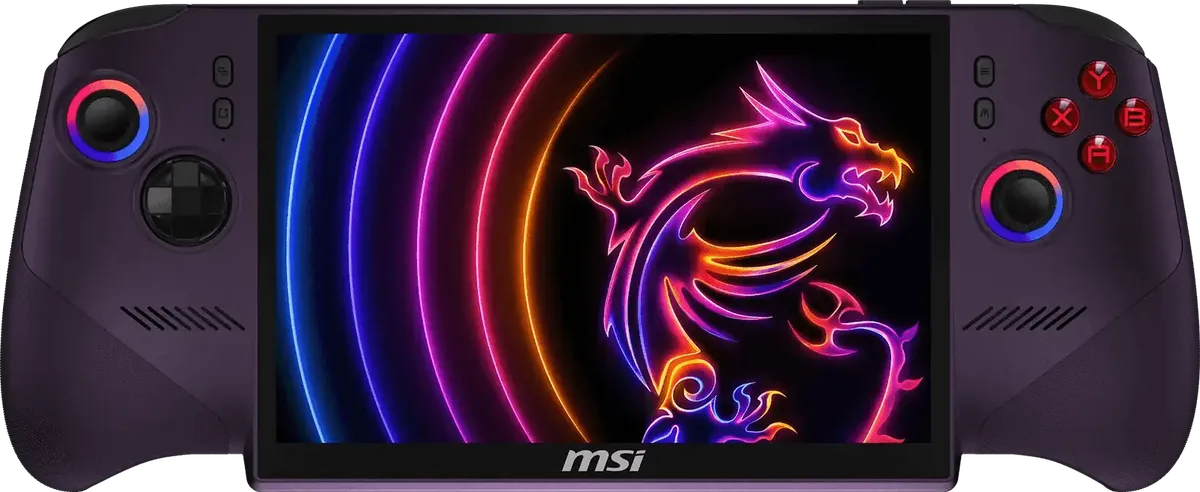
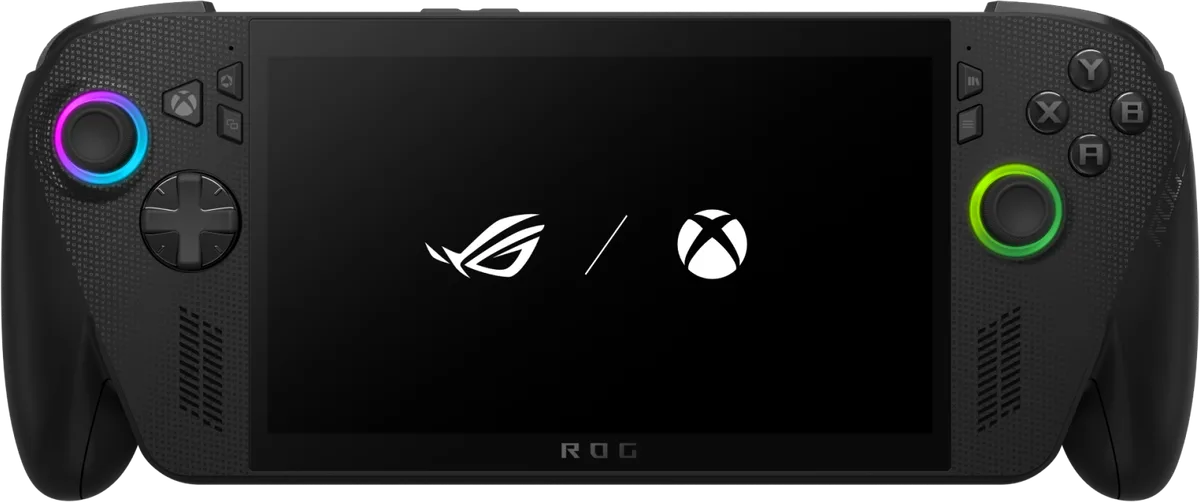
The MSI Claw 8 EX AI+ is the faster handheld by a wide margin and lasts longer on battery, thanks to Intel's Arc G3 Extreme. The ROG Xbox Ally X is lighter, $800 cheaper and at least as comfortable, with the same Xbox full-screen interface. Reviewers recommend the Claw to enthusiasts who want the most speed in a handheld; for most buyers the Ally X, or its OLED sibling the Ally X20, is the saner choice.
We haven't tested these handhelds ourselves. This guide draws on published reviews, video tests and each device's sourced spec sheet.
Our take
This is the first time a handheld has beaten AMD's best this clearly, and the Claw's lead shows up in every review. In r/MSIClaw, most owners answering whether to upgrade from an Ally X say yes. If I wanted the highest frame rates and the longest battery life in a Windows handheld, it'd be the one.
At $1,799, though, I'd want to be sure I'd use that headroom. The Ally X plays the same games at lower settings, feels at least as good in the hands and leaves $800 in your pocket. If the screen is what tempts you about the Claw, look at the Ally X20 first: the same Asus internals with an OLED panel for $500 less than the MSI.
Elvis
Pick the Claw 8 EX AI+ if
- You want the highest frame rates available in a Windows handheld
- You want the longest battery life and a larger 8-inch 1200p screen
- Price matters less to you than performance
Pick the ROG Xbox Ally X if
- You want a top-tier Windows handheld for $800 less
- You prefer the lighter, 715 g device with Xbox-style grips
- You play mostly lighter games or don't mind lowering settings
Key specs
| Spec | Claw 8 EX AI+ | ROG Xbox Ally X |
|---|---|---|
| Chip | Intel Arc G3 Extreme | AMD Ryzen AI Z2 Extreme |
| Software | Windows 11 Home | Windows 11 Home |
| Screen size | 8″ | 7″ |
| Panel | IPS LCD | IPS LCD |
| Resolution | 1920 × 1200 | 1920 × 1080 |
| Refresh rate | 120 Hz | 120 Hz |
| RAM | 32 GB | 24 GB |
| Storage | 1 TB | 1 TB |
| Battery | 80 Wh | 80 Wh |
| Weight | 785 g | 715 g |
| US list price | from $1,799 | from $999.99 |
Sources for every value are on each handheld's page. See every spec side by side.
Performance: Intel's clear lead
Every review measured the Claw 8 EX ahead. Engadget saw gains of 50 to 75 percent over the ROG Xbox Ally X and Legion Go 2, though it tested an Intel engineering sample with pre-production drivers. Tom's Hardware measured a 20 to 30+ fps lead across its suite, and PC Gamer's table put the Claw first in every game except one older upscaling test.
Specific numbers show the size of the gap. In Cyberpunk 2077 at 35 W, 1080p medium with XeSS performance, Engadget got 95 fps on the Claw against 62 and 57 fps on the two AMD handhelds. Tom's Guide tested the Claw against the ROG Xbox Ally X20, which uses the same internals as the Ally X, and measured Red Dead Redemption 2 at 1080p medium at 63.8 fps on the Claw against 22.8 fps on the Asus, both at 35 W.
Efficiency is the more striking result. Tom's Guide found the Claw still hit 48.8 fps in Red Dead Redemption 2 when limited to 17 W, more than double what the Asus managed at 35 W. Frame generation adds more on top, but Tom's Guide counts only about 50 games with XeSS 3 support, so it won't help everywhere.
The Ally X is no slouch. Notebookcheck measured it 14% ahead of the 2024 Ally X, and it handles recent games at lowered settings or with upscaling. Owners in an r/MSIClaw thread about upgrading from the Ally X mostly said yes, citing the higher performance with upscaling and frame generation, and one said it let them lower power for longer play.
Battery life
Both have an 80 Wh battery, so the Claw's longer runtime comes from efficiency. In Tom's Guide's gaming rundown the Claw lasted 4:10 against 2:47 for the Ally X20, an extra hour and 20 minutes, and the X20 shares the Ally X's chip and battery.
PC Gamer got about half an hour more from the Claw than from the Ally X in default mode, and the Claw's Endurance mode stretched its PCMark gaming test from two and a half hours to over five. Notebookcheck recorded 2 h 13 min from the Ally X in Turbo mode and 3 h 12 min in Performance mode, and the Claw's Cyberpunk 2077 runs went from 1:39 at 35 W to 3:19 in Endurance mode. (Notebookcheck)
Display
Both use IPS panels with VRR and neither has HDR. The Claw's is larger and sharper at 8 inches and 1920x1200, against 7 inches and 1920x1080 on the Ally X; both run at 120 Hz. The bigger 16:10 screen is the other reason r/MSIClaw owners give for switching from the Ally X.
Brightness is close. Notebookcheck measured about 540 nits on the Claw and a 490-nit maximum on the Ally X. Tom's Hardware calls the missing OLED a big miss at the Claw's price, and Tom's Guide gives the screen round to Asus's OLED Ally X20 instead. (Notebookcheck)
Comfort and controls
Both have flared, Xbox-style grips that reviewers like. The Claw weighs 785 g against 715 g for the Ally X, and measures 321 mm wide against 290 mm. Windows Central and Tom's Hardware say the Claw's grips spread the weight well, while Tom's Guide calls the Ally X the most comfortable handheld it has used.
Neither has a touchpad. The Claw has Hall effect sticks and triggers that avoid drift, but Engadget found its D-pad stiff for fighting games and Tom's Hardware counts only two back buttons. On the Ally X, Tom's Hardware found the bumpers a bit cheap. Size and weight come up among the Claw's drawbacks in an r/MSIClaw owners' thread too.
Heat and noise
PC Gamer saw the Claw's CPU reach 97 °C at 37 W package power, against 96 °C for the Ally X at 55 W, and found the Claw's fans quiet. Notebookcheck measured the Claw's fans spinning constantly at about 3,600 rpm, even at idle, and fan noise comes up in the r/MSIClaw owners' thread as well. Notebookcheck found the Ally X's grips stay cool and its noise moderate outside Turbo mode.
Software and tuning
Both boot into Microsoft's Xbox full-screen experience. HotHardware notes that the Ally X originally refused to continue without a Microsoft account, which Microsoft has since patched, and that the Claw still lands on the same screen every time if you're not signed in.
The Claw asks more of you. Engadget describes juggling MSI Center, the Xbox experience and Steam, with the Endurance mode frame target set in Intel's graphics software. HotHardware found that the default AI Engine mode, at 25 W sustained and 37 W boost, gave the best overall results, and that setting power limits by hand caused frame-time spikes, so it's best left alone.
On the Ally X, reviewers found launcher quirks and Windows prompts that still break through. In the r/MSIClaw owners' thread, MSI Center M and driver bugs are the most common complaints after price. (Tom's Hardware, TechRadar)
Price and value
The Claw 8 EX costs $1,799 in a single 32 GB, 1 TB configuration; the Ally X costs $999.99 with 24 GB and 1 TB. Several Claw reviewers tie its price to memory costs, and Windows Central estimates it would land around $1,299 in a normal market. Tom's Guide recommends it to enthusiasts and says everyone else should wait for a sale.
There's a third option. Asus's ROG Xbox Ally X20 adds an OLED screen, rubberized grips and reworked buttons to the same internals for $300 more than the Ally X. Tom's Guide calls its head-to-head with the Claw a tie: the X20 wins on screen, ergonomics and price, the Claw on performance and battery.
Even owners who upgraded feel the cost. The r/MSIClaw poster weighing a move from the Ally X worked out roughly $1,000 extra after selling the Asus, and price is the most repeated drawback in the owners' thread. (r/MSIClaw)
Watch

