Head to head
ASUS ROG Xbox Ally X vs Lenovo Legion Go 2
By ElvisPublished Updated
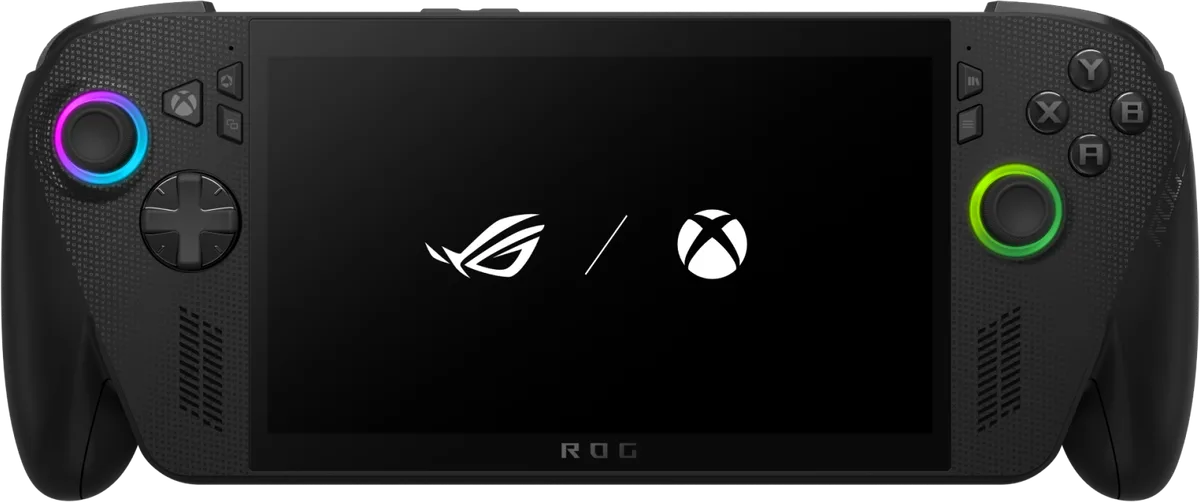
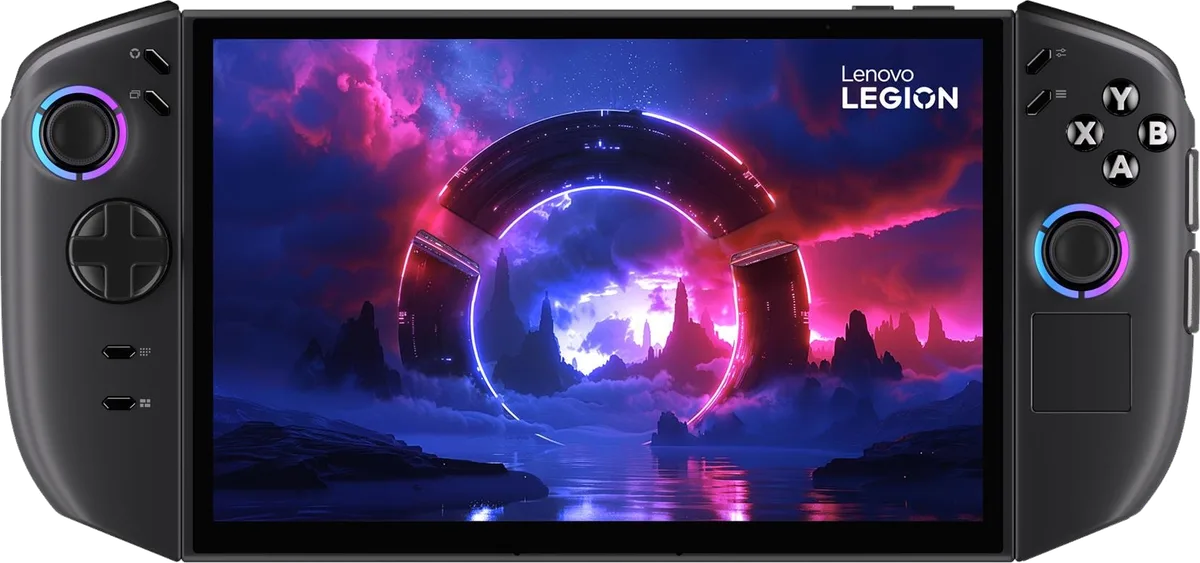
Both run Windows 11 on the same AMD Z2 Extreme silicon, so frame rates end up close and the choice comes down to everything around the chip. The ROG Xbox Ally X is lighter, cheaper and the more comfortable of the two. The Legion Go 2 has the much better screen, an 8.8-inch 144 Hz OLED with HDR, plus more RAM, detachable controllers and a kickstand, and it costs more and weighs about 200 g extra.
We haven't tested these handhelds ourselves. This guide draws on published reviews, video tests and each device's sourced spec sheet.
Our take
I'd buy the ROG Xbox Ally X for handheld play and the Legion Go 2 for everything else. If the device lives in your hands on the sofa or on a commute, the Ally X's grips and lower weight matter every minute you play, and reviewers keep coming back to that. Speed won't decide this: the two trade small wins in benchmarks.
The Legion Go 2 earns its price when you use what makes it different. The OLED is the best screen on any Windows handheld, and with the controllers off and the kickstand out it turns into a small tabletop console that's easy on the wrists. If that's how you'd play, the extra $350 is buying something real. If not, you're paying extra for weight you'll feel in every long handheld session.
Elvis
Pick the ROG Xbox Ally X if
- You play handheld for long sessions and want the lighter, better-gripping device
- You want the Xbox full-screen interface on top of Windows
- You want the Z2 Extreme for $350 less
Pick the Legion Go 2 if
- The screen matters most: OLED contrast, HDR and 144 Hz on 8.8 inches
- You'll play on a table with the kickstand or detach the controllers
- You want 32 GB of RAM and a faster SSD for the long run
Key specs
| Spec | ROG Xbox Ally X | Legion Go 2 |
|---|---|---|
| Chip | AMD Ryzen AI Z2 Extreme | AMD Ryzen Z2 Extreme |
| Software | Windows 11 Home | Windows 11 Home |
| Screen size | 7″ | 8.8″ |
| Panel | IPS LCD | OLED |
| Resolution | 1920 × 1080 | 1920 × 1200 |
| Refresh rate | 120 Hz | 144 Hz |
| RAM | 24 GB | 16 GB / 32 GB |
| Storage | 1 TB | 1 TB |
| Battery | 80 Wh | 74 Wh |
| Weight | 715 g | 920 g |
| US list price | from $999.99 | from $1,099.99 |
Sources for every value are on each handheld's page. See every spec side by side.
Performance: same chip, small differences
The Ally X uses AMD's Ryzen AI Z2 Extreme and the Legion Go 2 the Ryzen Z2 Extreme. AMD lists the same eight CPU cores (three Zen 5 and five Zen 5c) and 16 RDNA 3.5 GPU compute units for both, so on paper the CPU and GPU are the same; the AI version adds a 50 TOPS NPU. HotHardware notes that Lenovo allows a slightly higher 40 W power limit against 35 W on the Asus, while Lenovo's cheaper base Legion Go 2 swaps in the slower Ryzen Z2. (Tom's Hardware)
Windows Central ran both through the same tests after reviewing them, and found the Xbox Ally X just barely ahead in most CPU and GPU benchmarks. The Legion Go 2 got the better overall system score anyway, thanks to a noticeably faster SSD that helps with game loading.
Memory is the clearer difference. The Ally X has 24 GB of LPDDR5X and the Z2 Extreme Legion Go 2 has 32 GB, which HotHardware calls a clear win for Lenovo because the integrated GPU shares that memory and more of it gives newer games headroom.
Resolution matters more on the Legion Go 2. Its native 1920x1200 is a heavier load than the Ally X's 1920x1080: Tom's Hardware measured Shadow of the Tomb Raider at 66 fps at 800p and 42 fps at 1200p on battery. On either device, recent AAA games need a lower render resolution or upscaling, and Notebookcheck measured the Ally X 14% ahead of the 2024 Ally X, a real but modest step.
Display: the Legion Go 2's clearest win
The Legion Go 2's 8.8-inch OLED runs at 1920x1200 and up to 144 Hz with VRR and HDR. HotHardware works out that it's a 58% larger screen than the Ally X's 7-inch panel, and Windows Central calls it the best OLED handheld display so far. Notebookcheck measured about 1,155 cd/m2 peak in HDR.
The Ally X keeps the 7-inch 1080p 120 Hz IPS panel from the 2024 model, with VRR but no HDR. Tom's Guide measured 515.8 nits and was disappointed not to get OLED at this price, and HotHardware describes the Asus screen as washed out next to the Lenovo's. (Tom's Hardware)
In SDR the gap is contrast and colour more than brightness. Tom's Hardware measured the Legion Go 2 at 445 nits, dimmer than the Ally X, and PCWorld notes its glossy surface reflects in bright light. Indoors, owners in a long r/LegionGo thread who kept the Legion Go 2 mostly name the OLED and the screen size as the reason.
Comfort, weight and controls
This is where the Ally X pulls back. It weighs 715 g against 920 g for the Legion Go 2 with its controllers attached, which HotHardware puts at 33% heavier, partly because of the mechanisms and batteries the detachable controllers need. Tom's Hardware often ended Legion Go 2 sessions with tired hands and wrists.
The Ally X's fixed Xbox-style grips get some of the strongest praise in handheld reviews. Tom's Guide calls it the most comfortable handheld it has used, and Windows Central picks it as the clear winner on grips in its head-to-head. In the r/LegionGo comparison thread, a recurring group of owners say they simply prefer holding the Ally X for long sessions.
The Legion Go 2 answers with flexibility. Its controllers detach, it has a kickstand for tabletop play, Hall effect sticks and a small touchpad on the right controller, and an FPS mode with a mouse wheel on the controller. Windows Central points out that in tabletop mode the detached controllers weigh only 0.46 lb combined in your hands, which changes the weight argument if you play that way. (HotHardware)
Stick drift is worth a thought for long-term owners. HotHardware notes the Ally X's sticks are not Hall effect, though they can be replaced, while the Legion Go 2 uses Hall effect sticks that shouldn't drift. (Tom's Guide)
Battery life
The Ally X has the bigger battery at 80 Wh against 74 Wh, yet Windows Central's direct test came out slightly in Lenovo's favour for gaming. In Cyberpunk 2077 on the Steam Deck preset at maximum power and about 200 nits, the Legion Go 2 lasted 20 minutes longer; in Celeste at the lowest default power it lasted 12 minutes longer. Windows Central calls the Legion the winner, only by a little.
Other outlets point the other way. Notebookcheck got 3 h 12 min from the Ally X in its Performance mode and about 2.5 hours from the Legion Go 2 in its own Performance mode. Each maker sets its profiles differently, so the honest summary is that both last roughly two to three hours in demanding games and neither has a decisive edge. (Notebookcheck)
Software
The Ally X boots into Microsoft's Xbox full-screen experience, which reviewers rate well above the standard Windows 11 desktop, though still less polished than SteamOS. Windows Central also prefers Asus's Armoury Crate for tuning, since it exposes settings like VRAM allocation that need a trip to the BIOS on the Lenovo. (Tom's Hardware, Windows Central)
At launch the Legion Go 2 ran regular Windows 11 with Lenovo's Legion Space on top. Tom's Hardware calls Legion Space the best Windows-masking software it has seen, but reviewers still found Windows clunky on a handheld. Owners in the r/LegionGo thread report sleep and HDR quirks on both devices, and some sidestep Windows by installing Bazzite. (Tom's Guide)
Lenovo also sells a SteamOS version of the Legion Go 2. Windows Central lists it at $1,199.99 and expects it to run faster than the Windows model, since swapping Windows for SteamOS on the Xbox Ally X raised frame rates by as much as 32% in Tom's Hardware's testing. That version gives up easy access to Game Pass and other Windows stores.
Price and value
The Xbox Ally X costs $999.99 with 24 GB and 1 TB. The Legion Go 2 with the Z2 Extreme and 32 GB costs $1,349.99, so HotHardware puts the gap at $350, about 35%. Lenovo's cheaper Ryzen Z2 configuration still costs more than the Ally X, and Tom's Guide points out that even the base Legion is pricier.
HotHardware rates the Legion Go 2 the better machine overall, but says both play the same games with minimal performance difference. Its advice for people upgrading from a Steam Deck or an original Ally is that an OLED screen makes a bigger difference than the newer chip itself. Notebookcheck puts the Legion Go 2's premium over handhelds of similar speed at roughly 500 to 600 euros, money that pays for the OLED and the detachable controllers.
Not every owner thinks the premium holds up. In an r/LegionGo thread from someone who returned an Ally X for a Legion Go 2, the screen won over several commenters, while others called the Legion overpriced for its performance.
Watch

