Head to head
Nintendo Switch 2 vs Valve Steam Deck OLED
By ElvisPublished Updated
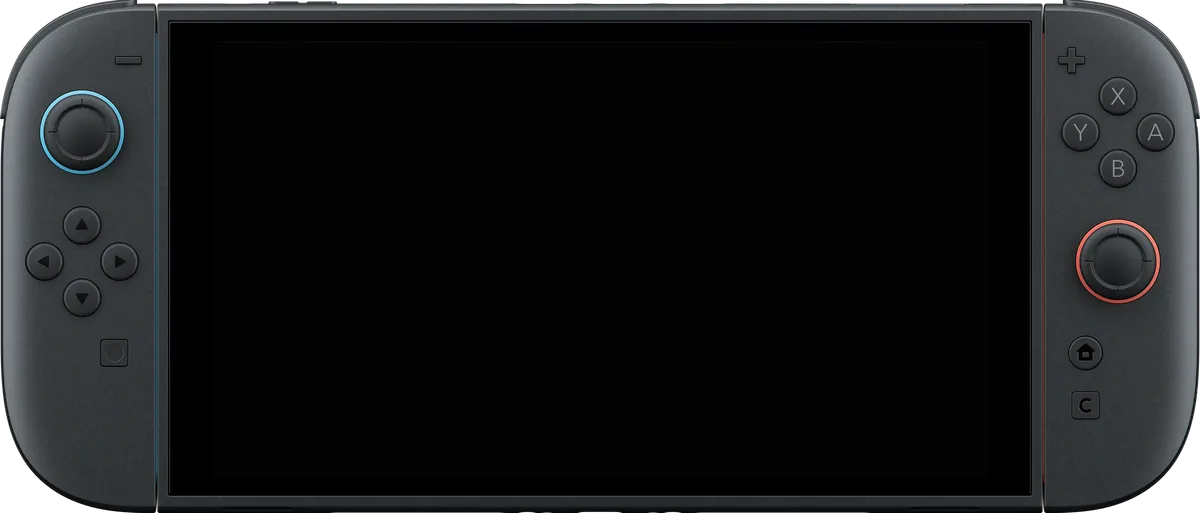
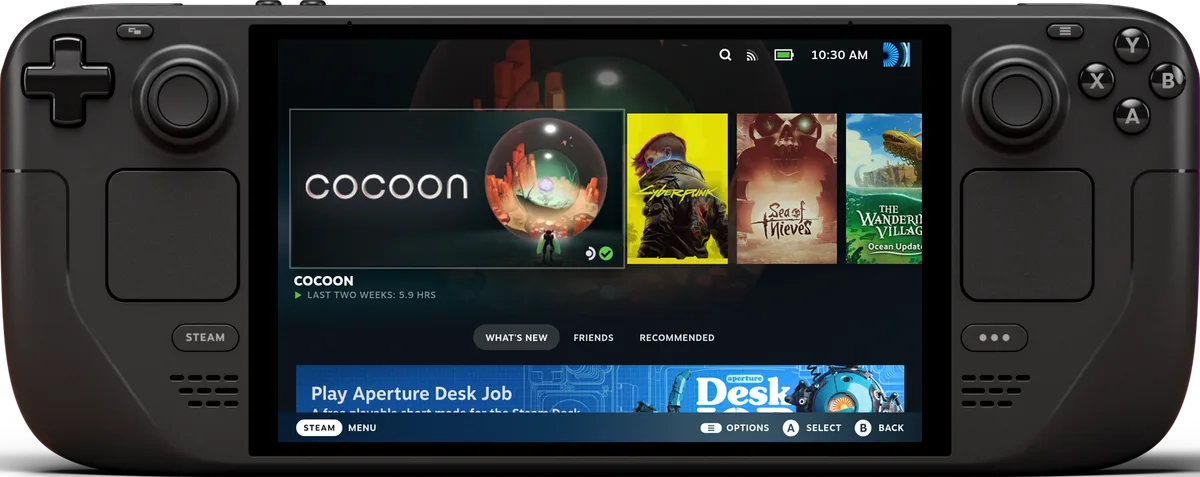
These two are less rivals than different platforms. The Switch 2 is the home of Nintendo's games, has a sharper 1080p 120 Hz screen, plays on a TV through its dock and is lighter. The Steam Deck OLED plays your Steam library, usually with cheaper games, on an HDR OLED screen, and it's the more comfortable of the two to hold. With the Deck now at $789 and the Switch 2 at $499.99, price also favours Nintendo. Pick by the games you want to play first.
We haven't tested these handhelds ourselves. This guide draws on published reviews, video tests and each device's sourced spec sheet.
Our take
If you want Mario Kart, Zelda or Pokémon, there's no decision to make: buy the Switch 2. What's interesting is how much of the third-party catalogue now lands on both, from Cyberpunk 2077 to Hogwarts Legacy and Hades II. For those games the Switch 2 is often the more efficient handheld, and the Deck is the more comfortable and flexible one.
I'd pick the Deck if you already have a Steam library or wait for sales, and if you play long sessions in your hands. I'd pick the Switch 2 if you play on the TV as much as on the go, or if it's going to be shared with a family. Plenty of owners end up with both, and reading their threads, that's less of a luxury than it sounds once the libraries split this cleanly.
Elvis
Pick the Switch 2 if
- You want Mario Kart World, Donkey Kong Bananza, Pokémon and other Nintendo games
- You'll play on the TV as much as in your hands
- You want the lighter, cheaper device with a 1080p screen
Pick the Steam Deck OLED if
- You already have a Steam library or buy PC games on sale
- You want an OLED screen with HDR and trackpads
- You play long handheld sessions and want proper grips
Key specs
| Spec | Switch 2 | Steam Deck OLED |
|---|---|---|
| Chip | Custom NVIDIA processor | AMD custom APU |
| Software | Nintendo Switch 2 system software | SteamOS 3 |
| Screen size | 7.9″ | 7.4″ |
| Panel | LCD | OLED |
| Resolution | 1920 × 1080 | 1280 × 800 |
| Refresh rate | 120 Hz | 90 Hz |
| RAM | — | 16 GB |
| Storage | 256 GB | 512 GB / 1 TB |
| Battery | — | 50 Wh |
| Weight | 534 g | 640 g |
| US list price | from $499.99 | from $789 |
Sources for every value are on each handheld's page. See every spec side by side.
Games come first
The libraries decide this more than the hardware. Nintendo's own games, from Mario Kart World and Donkey Kong Bananza to Pokémon Legends: Z-A and Metroid Prime 4: Beyond, are only on Nintendo hardware. The Switch 2 also runs the vast majority of original Switch games, some of them better through free upgrades, according to Engadget.
The overlap with PC is bigger than it was on the first Switch. Nintendo's eShop lists Switch 2 versions of Cyberpunk 2077, Elden Ring, Hogwarts Legacy, Resident Evil Requiem, Pragmata and Balatro, plus Switch 2 Editions of Hades II and Hollow Knight: Silksong, and a Switch 2 version of Monster Hunter Wilds is due on December 4, 2026.
The Deck reaches much further. Tom's Guide cites more than 19,000 games rated Verified or Playable for it, and many big PC releases in our game compatibility table, such as Baldur's Gate 3, Clair Obscur: Expedition 33 and God of War Ragnarök, had no Switch 2 version on Nintendo's US eShop when we checked. One odd exception runs the other way: Apex Legends is on Switch 2, while Valve rates it Unsupported on the Deck because of its anti-cheat.
Owners who have both describe a simple split. In an r/SteamDeck thread asking whether people use both, the most repeated answer was the Switch 2 for Nintendo exclusives and the Deck for everything else, including third-party games, emulation and streaming. In another, Deck fans pointed to cheaper third-party games on sale and mods as the reasons they buy those games on Steam. (r/SteamDeck)
Performance and efficiency
Raw speed is closer than you might expect. In tests by The Phawx, written up by Notebookcheck, the Deck OLED averaged 41.6 fps in Cyberpunk 2077 at 24 W of total system power against 33.5 fps on the Switch 2, about 24% ahead, and loaded the game nearly 78% faster.
Efficiency is where the Switch 2 shines. At the 8.6 W it averages under load, the same tests found the Switch 2 delivering 2.5 times the Deck's average frame rate, with much better 1% lows. PC Gamer credits Nvidia's DLSS upscaling for picking up the slack in many Switch 2 games, though it notes the chip is outpaced by the Ryzen Z1 Extreme in Windows handhelds. (Notebookcheck)
Tom's Guide goes as far as saying the best portable versions of Cyberpunk 2077 and Hogwarts Legacy are on Switch 2. On the Deck OLED, demanding games often sit at 30 to 45 fps, and Tom's Guide saw Cyberpunk hold 30 fps on its Steam Deck preset. Pocket Tactics thinks most players will notice little difference between the two in games both can run.
Display
The Switch 2 has the larger and sharper screen: a 7.9-inch 1920x1080 LCD at up to 120 Hz with VRR, against the Deck's 7.4-inch 1280x800 OLED at 90 Hz. Pocket Tactics found the resolution gap not all that noticeable in most games, and Tom's Guide came from a Steam Deck OLED and didn't feel shortchanged by the Switch 2 panel.
The OLED still wins on contrast and HDR. Engadget measured the Switch 2 at around 400 nits, with black levels that look closer to gray in dark scenes, and PC Gamer calls its handheld HDR mediocre. Tom's Guide measured the Deck OLED at 597 nits in SDR and 969 nits with HDR content.
Comfort and portability
The Switch 2 weighs 534 g and is just 13.9 mm thick, against 640 g and 49 mm for the Deck OLED, so it's the one that fits a bag. Its magnetic Joy-Con and kickstand get praise, and it doubles as a tabletop console. (IGN)
For long sessions the Deck is the more comfortable device. Tom's Guide took both on a trip and preferred the Deck's sculpted grips, four back buttons and two trackpads, finding the smooth Switch 2 body uncomfortable for extended play with larger hands. IGN and GamesRadar+ say the same, and r/SteamDeck owners describe the Switch 2 as slim but uncomfortable without an add-on grip, while calling the Deck bulky.
Battery life
Results depend heavily on the game. On its trip, Tom's Guide got a low-battery warning from the Switch 2 about 90 minutes into Star Wars Outlaws, while the Deck OLED was still above 50% after 90 minutes of Tomb Raider: Definitive Edition and ran another 80 minutes before warning. Engadget measured 2:23 in Mario Kart World on the Switch 2, and IGN got about two and a half hours from the Deck in Cyberpunk 2077.
Efficiency helps the Switch 2 in some tests despite its much smaller battery. BGR, summarising Digital Foundry, reports the Switch 2 drawing about 7 W in Hogwarts Legacy against about 14 W on the Deck. In light games the Deck's 50 Wh battery pulls ahead: TechRadar got over five hours from it in Hades 2, while GamesRadar+ got just over four hours from the Switch 2 in lighter titles.
At idle the gap is wide. The Phawx measured the Switch 2 at 1.18 W against 4 W for the Deck over a 12-hour idle test, which matters if you leave the device in sleep between sessions. (Notebookcheck)
Price and value
The Switch 2 launched at $449.99 and now lists at $499.99 with 256 GB of storage. The Steam Deck OLED launched at $549 and now costs $789 for 512 GB and $949 for 1 TB after Valve's 2026 price rise.
The hardware is only part of the cost. PC Gamer points to the Deck's bigger library of cheaper games, and Deck owners on r/SteamDeck name Steam sales as a big reason they buy third-party games there. Storage cuts the other way: Pocket Tactics notes that Baldur's Gate 3 alone needs at least 150 GB on the Deck, against 23.4 GB for Mario Kart World on Switch 2, and the Switch 2 starts with half the space of the cheapest Deck.
Watch

