Head to head
Valve Steam Deck OLED vs ASUS ROG Xbox Ally X
By ElvisPublished Updated
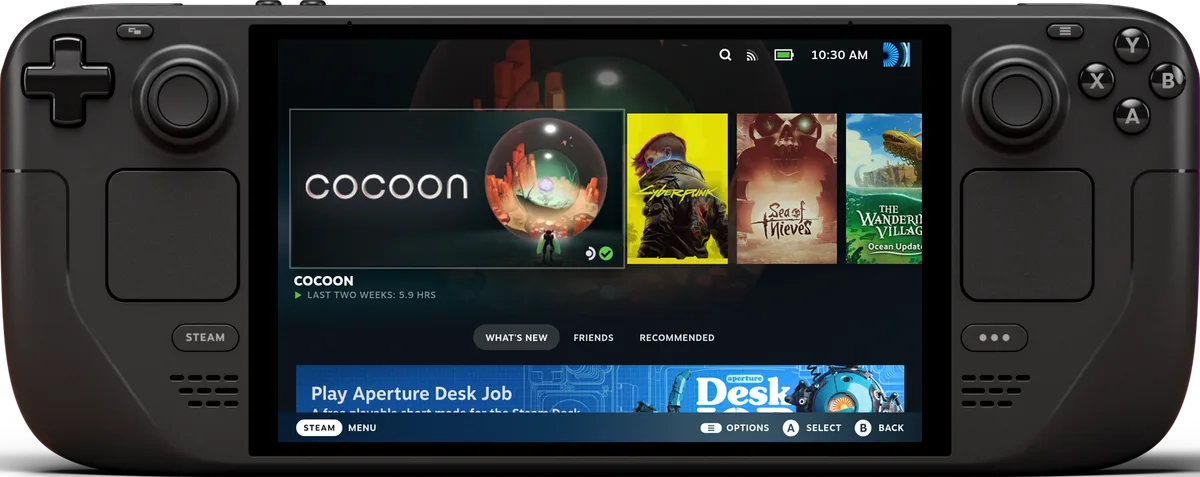
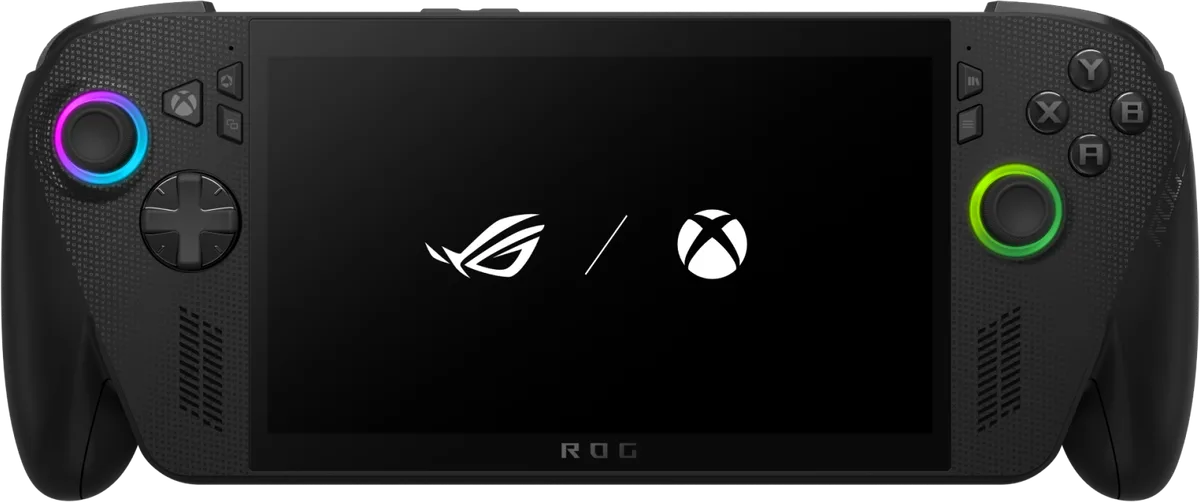
The Steam Deck OLED is the simpler handheld with the better screen for contrast and HDR, plus trackpads that no Windows rival matches. The ROG Xbox Ally X is much faster, has a sharper 1080p 120 Hz panel and runs Windows, so Game Pass, other PC stores and anti-cheat games all work. Valve's 2026 price rise shrank the gap between them to about $210, which makes this a closer call than it used to be.
We haven't tested these handhelds ourselves. This guide draws on published reviews, video tests and each device's sourced spec sheet.
Our take
Two years ago I'd have sent almost everyone to the Deck. At $789 against $999.99 it's a harder call, and I'd now decide by your library. If you play on Steam and stay away from competitive shooters with kernel anti-cheat, the Deck is still the more pleasant device: the OLED, the trackpads and SteamOS make it easy to live with, and its age shows mainly in new AAA games.
If you want to play the latest big releases at decent frame rates, or you use Game Pass, the Ally X is the better buy now. It's the faster machine by a wide margin, and the price difference is no longer the argument it was. Just know you're trading a great screen and Valve's software for speed and Windows.
Elvis
Pick the Steam Deck OLED if
- Your games are on Steam and you want the least setup
- You value an HDR OLED screen and trackpads over raw speed
- You mostly play indie, older or lighter games
Pick the ROG Xbox Ally X if
- You want much higher frame rates in new AAA games
- You play Game Pass, other PC stores or games with kernel anti-cheat
- You want a 1080p 120 Hz screen and grips built for long sessions
Key specs
| Spec | Steam Deck OLED | ROG Xbox Ally X |
|---|---|---|
| Chip | AMD custom APU | AMD Ryzen AI Z2 Extreme |
| Software | SteamOS 3 | Windows 11 Home |
| Screen size | 7.4″ | 7″ |
| Panel | OLED | IPS LCD |
| Resolution | 1280 × 800 | 1920 × 1080 |
| Refresh rate | 90 Hz | 120 Hz |
| RAM | 16 GB | 24 GB |
| Storage | 512 GB / 1 TB | 1 TB |
| Battery | 50 Wh | 80 Wh |
| Weight | 640 g | 715 g |
| US list price | from $789 | from $999.99 |
Sources for every value are on each handheld's page. See every spec side by side.
Performance: three years of chip progress
These two sit years apart. The Deck's custom AMD chip has four Zen 2 cores and eight RDNA 2 compute units in a 4 to 15 W power range. The Ally X's Ryzen AI Z2 Extreme has eight cores and 16 GPU compute units and runs at up to 35 W. Notebookcheck measured the Ally X 14% ahead of the 2024 Ally X, and reviewers of the Deck OLED already noted that Z1 Extreme handhelds like the ROG Ally post higher frame rates. (GamesRadar+)
In practice the Deck OLED often sits at 30 to 45 fps in demanding games. Tom's Guide saw Cyberpunk 2077 hold 30 fps on its Steam Deck preset, and TechRadar saw Deathloop fall to about 15 fps at default settings. On the Ally X with the same Cyberpunk preset, Windows Central averaged 45 fps and 83 fps with AMD's HYPR-RX enabled, while TechRadar saw about 30 fps, so settings and power mode change the result a lot.
The Deck renders far fewer pixels at 1280x800, which helps it keep up in lighter games. The Ally X's 1920x1080 panel looks sharper but asks more of the chip, so expect to lower the render resolution or use upscaling in recent games. Owners in an r/SteamDeck thread about trading a 1 TB OLED for the Ally X broadly agree that the Asus wins on raw performance.
Which games run
Software compatibility is the biggest practical difference. On SteamOS, Valve rates each game itself. Of the 35 popular PC games in our game compatibility table that Valve had rated when we checked, 20 were Verified, 10 Playable and 5 Unsupported.
The unsupported ones show the two reasons a game won't work on the Deck. Apex Legends and Destiny 2 are blocked by anti-cheat that doesn't support SteamOS. For Black Myth: Wukong and Crimson Desert, Valve says the graphics settings can't be configured to run well on the Deck. Gears of War: E-Day is also rated Unsupported. All five run on the Ally X, because it's a Windows PC.
Outside Steam the gap widens. IGN notes that Epic, GOG and itch.io games on the Deck usually need desktop mode and third-party launchers, while the Ally X installs Game Pass, Epic, EA and Ubisoft launchers like any PC. BGR credits SteamOS and Valve's Verified program for a smoother experience inside Steam, but says Windows on the Ally gives easy access to the other stores.
Display
The Deck's 7.4-inch OLED wins on contrast and HDR. Tom's Guide measured 597 nits in SDR and 969 nits with HDR content, with 101.8% DCI-P3 coverage, and PC Gamer says the 90 Hz refresh makes 30 to 45 fps games feel smoother.
The Ally X's 7-inch IPS panel is sharper at 1920x1080 and faster at 120 Hz with VRR, but it has no HDR. Tom's Guide measured it at 515.8 nits and wished for OLED at this price. In an r/SteamDeck thread on choosing between the two, OLED came up repeatedly as the reason to keep the Deck, and several owners called the Ally X screen a step back. (Tom's Hardware)
Comfort and controls
The Deck OLED weighs 640 g and the Ally X 715 g. Both are comfortable: the Deck's new concave thumbsticks get praise, and Tom's Guide calls the Ally X's Xbox-style grips the most comfortable it has used. Both are also big to carry, with TechRadar finding the Deck's 298 mm body hard to pack and Tom's Hardware saying the Ally X's grips make it wider and bulkier. (PC Gamer)
The Deck has two 32.5 mm haptic trackpads and four back buttons; the Ally X has two assignable grip buttons and no touchpad. That matters more than it sounds for strategy games and PC titles without full controller support, and trackpads were one of the most common reasons r/SteamDeck owners gave for sticking with Valve's handheld. (Tom's Hardware)
Battery life
The Ally X carries 80 Wh against the Deck's 50 Wh, but it also draws much more power. In demanding games reviewers measured similar runtimes: IGN got about two and a half hours from the Deck OLED in Cyberpunk 2077, and Notebookcheck got 2 h 13 min from the Ally X in Turbo mode and 3 h 12 min in Performance mode.
Light games stretch both. TechRadar got over five hours in Hades 2 on the Deck, and Windows Central got 5 h 6 min in Celeste on the Ally X at 13 W and 25% brightness. Comparisons of power settings between the two aren't reliable, as commenters on an owner-run r/SteamDeck test pointed out, because each device reports its power limit differently.
Software
SteamOS is the simpler system. GamesRadar+ and IGN rate it easier to use than Windows 11 on rival handhelds, and TechRadar found that even a Verified badge doesn't guarantee a game runs well out of the box. BGR notes that Windows handhelds also suffer bugs that tend to appear after major updates.
The Ally X runs Windows 11 under Microsoft's Xbox full-screen interface. Tom's Hardware rates it well above the standard Windows desktop but still less polished than SteamOS, with launcher quirks along the way. A popular suggestion among r/SteamDeck owners is to install SteamOS or Bazzite on the Ally X to get the Deck's interface on faster hardware, at the cost of Game Pass and anti-cheat support.
Price and value
Valve raised Steam Deck OLED prices in 2026 to $789 for 512 GB and $949 for 1 TB, up from $549 and $649 at launch. The Ally X costs $999.99 with 24 GB and 1 TB. That leaves a gap of about $210 against the 512 GB Deck and about $50 against the 1 TB model.
BGR's 2026 comparison reaches the same conclusion: it rates the Deck OLED the better piece of hardware overall, but calls the ROG Ally line the better buy at the new prices. Before the price rise, Tom's Guide called the Deck OLED arguably the best handheld for most people and the 2024 Ally X the best Windows handheld, which still describes the split between them.
Watch

