Head to head
Valve Steam Deck OLED vs Valve Steam Deck LCD
By ElvisPublished
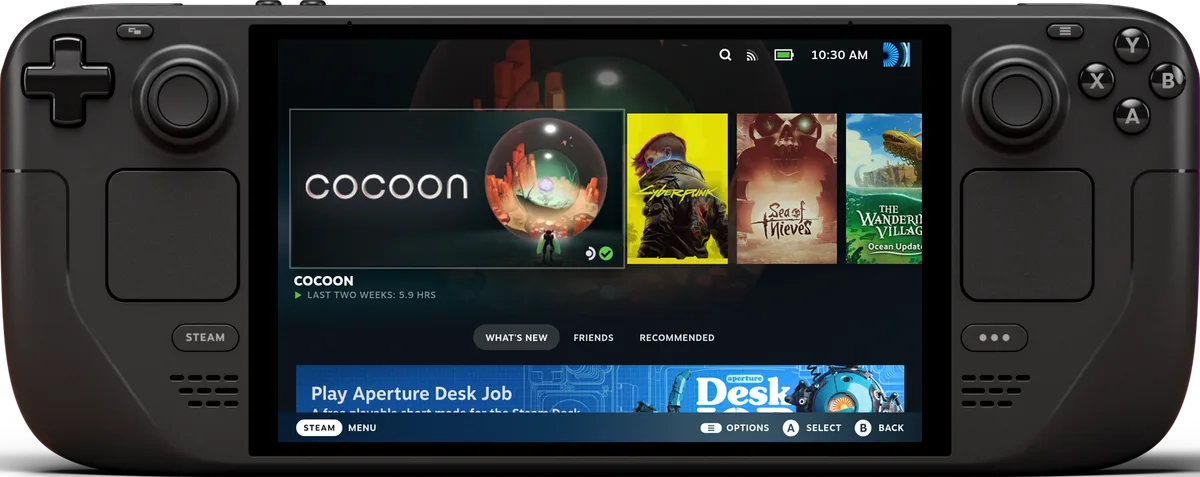
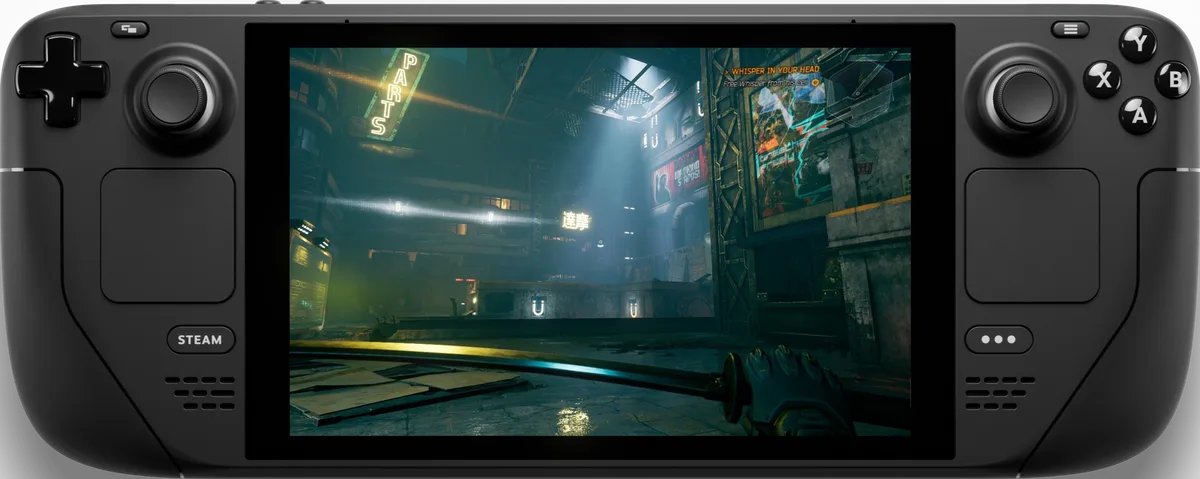
Buy the Steam Deck OLED. It runs the same Zen 2 and RDNA 2 chip family, and reviewers saw frame rates within a few fps of the LCD, but it adds a 7.4-inch HDR screen at 90 Hz, a 50 Wh battery that lasted clearly longer in tests, Wi-Fi 6E and 29 g less weight. Valve stopped making the LCD in December 2025, so a new purchase means the OLED from $789, and the LCD is a used option.
We haven't tested these handhelds ourselves. This guide draws on published reviews, video tests and each device's sourced spec sheet.
Key differences
HandheldQuest calculation from the sourced specs below. Differences under 3% are left out.
- Valve Steam Deck OLED has 25% more battery capacity (50 Wh vs 40 Wh)
- Valve Steam Deck LCD is 29 g heavier than Valve Steam Deck OLED (+5%, 669 g vs 640 g)
- Valve Steam Deck OLED has a 6% larger screen (7.4″ vs 7″)
- Valve Steam Deck OLED has a 50% higher refresh rate (90 Hz vs 60 Hz)
- Valve Steam Deck OLED has 700% more base storage (512 GB vs 64 GB)
- Valve Steam Deck OLED lists for $440 more than Valve Steam Deck LCD (+126%, $789 vs $349, lowest US list price)
Our take
If you are buying new, Valve has made the choice for you: it stopped making the LCD. At $789 for 512 GB it costs far more than the $399 the LCD sold for, and the reviews show what the extra money buys. The screen gets the most praise, and demanding games ran roughly half an hour to an hour longer per charge. The OLED also runs cooler and quieter and weighs less. It does not buy more speed, because the games ran at nearly the same frame rates.
A used LCD at a real discount is still a capable handheld for lighter games, and the launch reviews had demanding ones at 40 to 50 fps with tuning. I would still pay for the OLED if you travel with it or play for long stretches. If you already own an LCD, I would keep it unless the screen or the battery is what bothers you.
Elvis
Pick the Steam Deck OLED if
- You are buying new, since Valve no longer makes the LCD
- You want the HDR OLED screen at 90 Hz and longer runtime in demanding games
- You care about a cooler, quieter and slightly lighter handheld
Pick the Steam Deck LCD if
- You find a used unit at a clear discount to the OLED
- You mostly play lighter games and short sessions
- You already own one and the screen and battery do not bother you
Key specs
| Spec | Steam Deck OLED | Steam Deck LCD |
|---|---|---|
| Chip | AMD custom APU | AMD custom APU |
| Software | SteamOS 3 | SteamOS 3 |
| Screen size | 7.4″ | 7″ |
| Panel | OLED | IPS LCD |
| Resolution | 1280 × 800 | 1280 × 800 |
| Refresh rate | 90 Hz | 60 Hz |
| RAM | 16 GB | 16 GB |
| Storage | 512 GB / 1 TB | 64 GB / 256 GB / 512 GB |
| Battery | 50 Wh | 40 Wh |
| Weight | 640 g | 669 g |
| US list price | from $789 | from $349 |
Sources for every value are on each handheld's page. See every spec side by side.
Price and which models are still sold
Valve's current prices, checked on 22 October 2026, are $789 for the 512 GB OLED and $949 for the 1 TB model, in effect since 27 May 2026 and up from $549 and $649 at launch. The LCD sold for $399 with 256 GB from November 2023, and Valve stopped making it in December 2025.
While both were on sale, TechRadar's December 2024 comparison listed the 256 GB LCD at $399 and the 512 GB OLED at $549, a $150 gap by its listed prices (its text says 'just over $100'). It recommended the OLED to anyone who could afford it and the LCD to those on a tighter budget. That gap is gone in new stock, because Valve no longer makes the LCD and the cheapest new Steam Deck is the $789 OLED. Used LCD units have no list price, so judge any offer against what the OLED costs.
Screen: OLED HDR at 90 Hz against LCD at 60 Hz
The OLED has a 7.4-inch HDR panel at up to 90 Hz, and the LCD a 7-inch IPS at 60 Hz. Both are 1280x800. Valve rates the LCD at 400 nits typical and the OLED at 600 nits SDR with a 1,000-nit HDR peak. Measured figures differ by test: Tom's Guide recorded 597 nits in SDR and 969 nits with HDR content on the OLED and 169 nits on the original Deck, while Ars Technica put the LCD's maximum at 500 nits.
Reviewers of the LCD found it good for the price but flawed. Ars Technica saw washed-out colour, obvious light bleed and no variable refresh rate, while still calling 500 nits enough for a sunny day. IGN said it looks good but lacks the vibrance of a Switch OLED. PC Gamer says the OLED's 90 Hz smooths out games that waver around 30 to 40 fps, and GamesRadar+ says it makes everything feel slicker even at lower frame rates. PC Gamer adds that the contrast and colour help hide the softness of 1280x800.
TechRadar's side-by-side comparison also found the OLED's colour and contrast noticeably more vivid than the LCD's.
Battery life
The LCD has a 40 Wh battery and the OLED a 50 Wh one. Valve quotes 2 to 8 hours of gameplay for the LCD and 3 to 12 hours for the OLED. A Valve engineer told Tom's Hardware that the LCD's range assumes a 30 fps limit.
Reviewers who ran both models saw the OLED last longer in demanding games. IGN's Cyberpunk 2077 test at 50% brightness gave just over 90 minutes on the LCD and a full hour more on the OLED. Tom's Guide played Spider-Man on medium for a little over two hours on the OLED against about 90 minutes on its LCD. GamesRadar+ got almost four hours against just under three. At default settings PC Gamer got 45 to 60 minutes more, and keeping HDR on at 90 Hz cost the OLED only about 20 minutes.
Club386, reporting Dave2D's battery tests, gives 428 minutes on the OLED and 312 on the LCD in Dead Cells at 60 fps, and 126 against 103 minutes in Cyberpunk 2077. It does not state brightness. The same report has the OLED taking 82 minutes to reach 80% from empty against 63 minutes for the LCD.
Settings matter as much as the model. At 50% brightness PC Gamer recorded about 83 minutes in God of War on the LCD and around 200 minutes with a 30 fps lock, while light games like FTL reached about seven hours. TechRadar got just over two hours on the OLED in demanding games and over five hours in Hades 2. Those tests use different games, so do not line the figures up against each other.
Performance: same chip family, small differences
Both have four Zen 2 cores at 2.4 to 3.5 GHz, eight RDNA 2 compute units and a 4 to 15 W power range. The OLED's APU is built on 6 nm instead of 7 nm and its memory runs at 6400 MT/s against 5500 MT/s. IGN found every game within 3 fps of the original Deck, and GamesRadar+ measured near-identical Cyberpunk 2077 results, with the OLED about 4 fps ahead in Hitman 3.
Either model handles lighter and older games well and needs tuning in new ones. IGN saw GTA V at 40 to 50 fps on maximum settings on the LCD, and PC Gamer got 40 to 50 fps in God of War with FSR on Quality. Tom's Guide saw Doom Eternal and Marvel's Spider-Man at 35 to 45 fps on medium settings on the OLED. TechRadar notes that some Deck Verified games struggled on both.
Heat and fan noise
IGN measured the LCD's fan at about 49 dB, louder than a PS5, and PC Gamer found its pitch annoying even under light loads. On the OLED, IGN's side-by-side thermal tests showed hotspots near the vents 5 to 10 °C cooler, and PC Gamer describes the larger fan as much softer. GamesRadar+ saw about 60 °C under load and says the fan rarely drew attention.
Club386, reporting Dave2D, has the OLED at 72 °C and 35 dB against 77 °C and 37 dB for the LCD, a 5 °C difference at the low end of IGN's 5 to 10 °C. Noise was measured differently by each outlet (IGN 49 dB and Ars Technica about 35 dB on the LCD, Dave2D 37 dB), so compare the direction, not the numbers.
Weight, Wi-Fi and storage
The OLED weighs 640 g and the LCD 669 g, in an identical 298 x 117 x 49 mm body with the same controls, trackpads and 45 W charging. PC Gamer, GamesRadar+ and IGN all noticed the 29 to 30 g difference in long sessions.
The OLED has Wi-Fi 6E and Bluetooth 5.3, and the LCD Wi-Fi 5 and Bluetooth 5.0. Both use an NVMe SSD with a microSD slot. The last LCD model came only with 256 GB, while the OLED comes with 512 GB or 1 TB, twice or four times as much.
Which one to buy
In December 2024, while both were on sale, TechRadar called the OLED the definitive Steam Deck and the LCD a solid handheld for a tighter budget. For LCD owners the case for upgrading is weaker. Tom's Guide advises occasional players to keep their LCD, and PC Gamer saw no sensible reason for existing owners to upgrade. Game Informer called the OLED a considerable expense for incremental change, a verdict written at the $549 launch price, before the May 2026 rise.