Head to head
Lenovo Legion Go S vs Valve Steam Deck OLED
By ElvisPublished
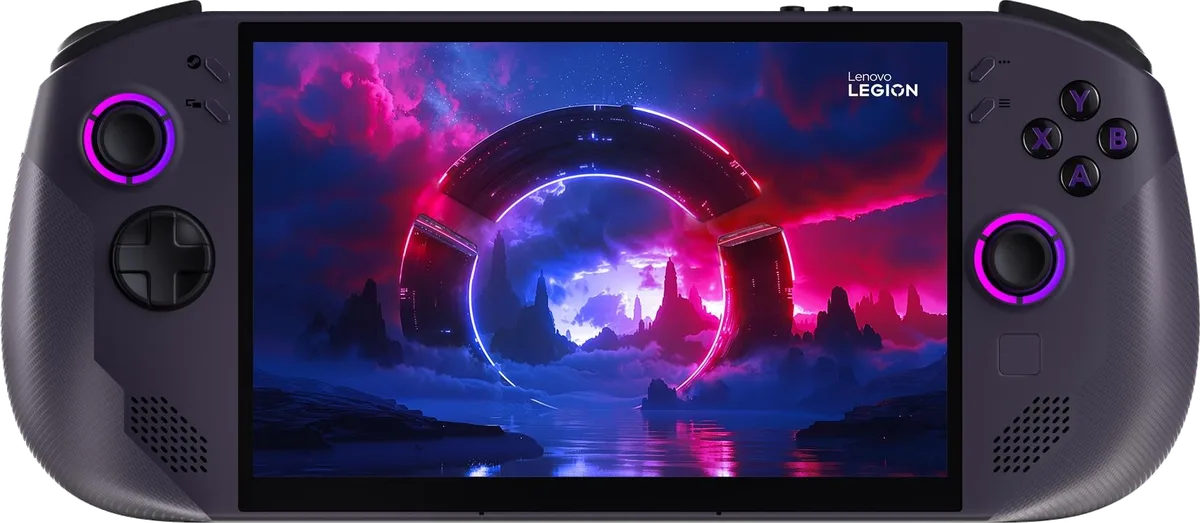
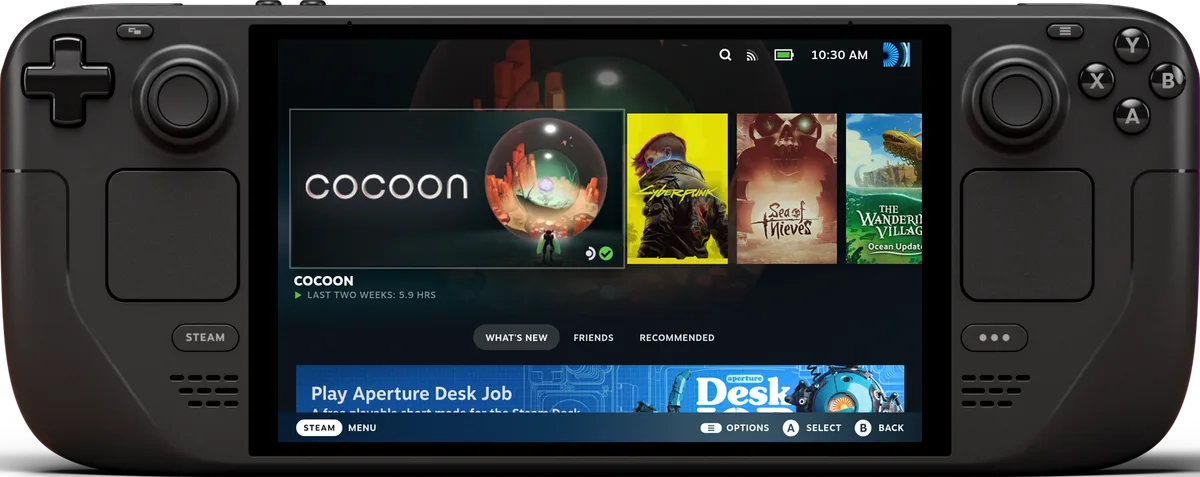
Both run SteamOS, so this is a hardware choice. The Legion Go S is faster and has a larger 8-inch 1200p 120 Hz screen with VRR. The Steam Deck OLED is lighter, has the better HDR OLED screen, proper trackpads and Valve's more polished software, and usually lasts longer on battery. Reviewers listed the Go S at $599.99 in 2025; Valve now charges $789 for the 512 GB Deck OLED, so check current prices before choosing.
We haven't tested these handhelds ourselves. This guide draws on published reviews, video tests and each device's sourced spec sheet.
Our take
In 2025 I'd have sent most people to the Deck, and both PCWorld reviewers did the same. Valve's price rise to $789 narrows that, and the Legion Go S is 20 to 40% faster in the tests that compared them directly. Reviewers listed the Z2 Go model at $599 to $599.99 in mid-2025, but retail prices have moved since, so compare today's prices before deciding.
I'd still pick the Deck if you play lighter games, value battery life, or use the trackpads for strategy and mouse-driven games; it's also the more refined device. For newer AAA games, the Legion Go S is the stronger performer, and the Z1 Extreme model adds roughly another 10% at a higher price.
Elvis
Pick the Legion Go S if
- You want more performance than the Deck in newer games
- You want a bigger 1200p 120 Hz screen with VRR
- You play newer AAA games and don't mind a heavier device
Pick the Steam Deck OLED if
- You want the HDR OLED screen and two full-size trackpads
- You value battery life in lighter games and a quieter, lighter device
- You want Valve's own hardware with the most polished SteamOS
Key specs
| Spec | Legion Go S | Steam Deck OLED |
|---|---|---|
| Chip | AMD Ryzen Z2 Go | AMD custom APU |
| Software | SteamOS or Windows 11 Home | SteamOS 3 |
| Screen size | 8″ | 7.4″ |
| Panel | IPS LCD | OLED |
| Resolution | 1920 × 1200 | 1280 × 800 |
| Refresh rate | 120 Hz | 90 Hz |
| RAM | 16 GB / 32 GB | 16 GB |
| Storage | 512 GB / 1 TB | 512 GB / 1 TB |
| Battery | 55.5 Wh | 50 Wh |
| Weight | 740 g | 640 g |
| US list price | from $599.99 | from $789 |
Sources for every value are on each handheld's page. See every spec side by side.
Which Legion Go S
Lenovo sells the SteamOS Legion Go S in two versions: Ryzen Z2 Go with 16 GB and 512 GB, listed at $599.99 in Android Authority's June 2025 review, and Ryzen Z1 Extreme with 32 GB and 1 TB, listed at $829 in Pocket Tactics. A Windows model also exists, but this guide compares the SteamOS versions. Reviews split between the two chips, so each finding below notes which one was tested.
The chips are not close. The Z2 Go has four Zen 3+ cores and an RDNA 2 GPU, while the Z1 Extreme has eight Zen 4 cores and RDNA 3 graphics. ExtremeTech, relaying Dave2D's tests, puts the Z1 Extreme version about 10% ahead of the Z2 Go.
Performance
Even the Z2 Go is faster than the Deck. PCWorld's head-to-head found the Z2 Go Legion Go S 20 to 40% quicker depending on the game at the Deck's 1280x800 resolution. In Dave2D's tests, as reported by ExtremeTech, the Z2 Go ran Cyberpunk 2077 at 46 fps against the Deck's 38 fps when both were held to 15 W, and up to 64 fps at the Legion's full 33 W.
Android Authority explains where the headroom comes from: the Z2 Go can draw 28 W where the Steam Deck tops out at 15 W. Pocket Tactics found the Z2 Go SteamOS model ran most games well, though The First Descendant stuttered.
On the Z1 Extreme model, Tom's Guide saw Doom: The Dark Ages at about 25 fps at 1200p and medium settings, and 56 to 61 fps at 800p with FSR. On the Deck OLED, Tom's Guide saw Doom Eternal and Spider-Man at 35 to 45 fps on medium and Cyberpunk 2077 holding 30 fps.
The Legion's 1920x1200 screen is a heavier load than the Deck's 1280x800, so most recent games will run below native resolution on it. PCWorld's 20 to 40% figure is at the Deck's resolution.
Display
The two screens favour different things. The Legion Go S has an 8-inch 1920x1200 IPS LCD at up to 120 Hz with VRR, which Android Authority and Pocket Tactics point out no Steam Deck has. PCWorld calls it very high quality for an LCD. Tom's Hardware measured 455.5 nits on the Windows model.
The Deck OLED's 7.4-inch 1280x800 panel runs at 90 Hz, without VRR, and wins on contrast and HDR. Tom's Guide measured 597 nits in SDR and 969 nits with HDR content. PC Gamer says the contrast and colour help hide the lower resolution, and T3, testing the Legion, says an OLED would have been nice.
Comfort and controls
The Legion Go S weighs 740 g against 640 g for the Deck OLED. Android Authority finds it too heavy, while T3 rates it the most ergonomic handheld PC it has tested. PCWorld calls it bigger, chunkier, heavier and louder, though one of its two reviewers preferred how it feels in the hands.
Controls favour the Deck, as PCWorld also found. It has two full-size trackpads and four back buttons; the Legion has one rear paddle per side and a small touchpad that Tom's Hardware, Pocket Tactics and Android Authority all found hard to use, with Android Authority saying it never worked under SteamOS. Android Authority also found the Steam and Quick Access buttons too easy to hit by mistake.
Owners echo this. In a long r/LegionGo thread from a Z2 Go owner who also has a Deck, several commenters called the small trackpad useless while still using the Legion as their main device.
Battery life and noise
The Legion Go S has a 55.5 Wh battery against 50 Wh on the Deck OLED, but its chips draw more. Android Authority puts demanding AAA play at 90 to 120 minutes on the Legion, and Tom's Guide got about 1.5 hours in Doom: The Dark Ages on the Z1 Extreme model at 30 W.
Light games narrow the gap. ExtremeTech reports Dave2D's SteamOS Legion Go S running Dead Cells for over six hours and Hades for just over four, competitive with the Deck, though the Deck still came out ahead in his testing. TechRadar got over five hours from the Deck OLED in Hades 2, and IGN about two and a half hours in Cyberpunk 2077.
Fan noise is a recurring complaint on the Legion. Tom's Guide lists loud fans as a main dislike on the Z1 Extreme model, and T3 says they get loud almost regardless of the game. In an r/SteamDeck thread from an owner who returned a Legion Go S, heat, fan noise and battery life were the most repeated reasons to stay with the Deck.
Software and games
Both run SteamOS, so the game library is the same, including its gaps. Android Authority and Pocket Tactics note that games such as Fortnite and Destiny 2 won't launch on the Legion, and Valve rates Destiny 2 Unsupported on the Deck because of its anti-cheat.
SteamOS is more polished on Valve's own hardware. PCWorld found fewer hiccups on the Deck with text input, resolution options and control customisation, and is unsure about long-term driver support on the Lenovo. Valve's Verified ratings in our game compatibility table are tested on the Steam Deck, so they're a guide, not a guarantee, for the Legion.
Price and value
The 2025 reviews compared a $599.99 Legion Go S with a $549 Deck OLED, and Android Authority called the choice a matter of taste. Valve has since raised the Deck OLED to $789 for 512 GB and $949 for 1 TB. Retail prices for the Legion Go S have moved too, so check current listings.
That removes the Deck's old price advantage, though not its polish. Tom's Guide's advice still holds for existing owners: if you're happy with your Steam Deck, you don't need to upgrade.
Watch

