AMD chip
AMD Ryzen Z2 Go
By ElvisPublished
The Ryzen Z2 Go is one of AMD's entry-level handheld chips, used in the Lenovo Legion Go S. Despite the Z2 name it has four Zen 3+ cores and an RDNA 2 GPU. Reviewers found it struggles in recent AAA games at the Legion Go S's native 1200p, and runs noticeably better on SteamOS.
We haven't tested these handhelds ourselves. This guide draws on published reviews of the handhelds built on this chip, and on AMD's own specifications.
Our take
The Z2 Go is the chip I'd be most careful with, because the name suggests it belongs with the Z2 Extreme. It doesn't: AMD's own spec sheet puts it closer to the Steam Deck's generation than to the Z2 Extreme, and the reviews of the Legion Go S show it.
It's fine for indie games, older titles and lighter AAA at 800p. If you mostly want new releases, spend more on a Z1 Extreme or Z2 Extreme handheld, or pick the SteamOS Legion Go S with the Z1 Extreme.
Elvis
Specifications
| CPU | Zen 3+, 2 MB L2 / 8 MB L3 |
|---|---|
| Cores / threads | 4 / 8 |
| CPU clock | 3–4.3 GHz |
| GPU | AMD Radeon (RDNA 2) |
| GPU CUs | 12 |
| GPU clock | up to 2.2 GHz |
| Power (TDP) | 15–30 W |
Source: AMD, AMD Ryzen Z2 Go specifications, checked October 22, 2026. Each handheld sets its own power limits within this range.
Gaming handhelds with the AMD Ryzen Z2 Go
Lenovo · SteamOS or Windows 11 Home
Legion Go S
$599.99MSRP
- Chip
- AMD Ryzen Z2 Go
- Display
- 8″ 120 Hz IPS LCD
- Battery
- 55.5 Wh
- Weight
- 740 g
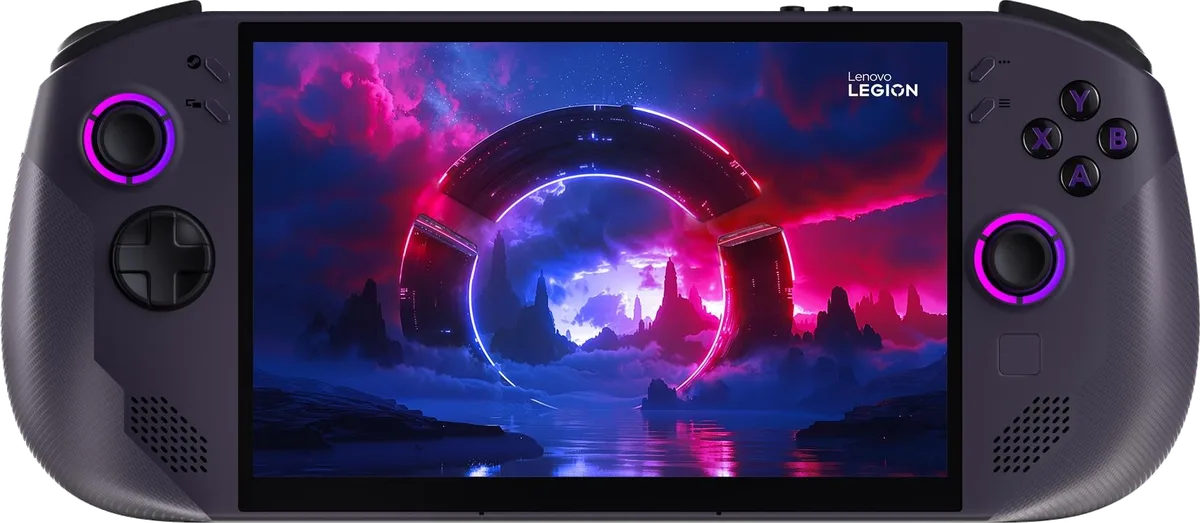
What the name hides
AMD lists four Zen 3+ CPU cores with eight threads, a 12 compute unit RDNA 2 GPU at up to 2.2 GHz and a 15 to 30 W range. The Z2 Extreme, by comparison, has eight newer cores and a 16 compute unit RDNA 3.5 GPU.
Performance in the Legion Go S
On the Windows Legion Go S, Tom's Guide got about 25 fps in Doom Eternal at native resolution and medium settings, and 10 to 15 fps in Cyberpunk 2077 on the Steam Deck preset; both only became playable at 720p and low settings.
Tom's Hardware measured Cyberpunk 2077 at 35 fps at 800p and 18 fps at 1200p while plugged in. It found the Legion Go S about 10% faster than the original Z1 Extreme Legion Go on battery, and 10 to 20% slower at 40 W plugged in.
Software helps. Pocket Tactics found the Z2 Go SteamOS model ran most games well, though The First Descendant stuttered, and Android Authority notes the Z2 Go can draw 28 W against the Steam Deck's 15 W, which leaves room for more frames.
Battery life
Tom's Hardware measured 1 hour 42 minutes in PCMark 10's gaming test on the Windows Legion Go S, 17 minutes less than the original Legion Go. Android Authority puts demanding AAA play at 90 to 120 minutes on both versions, and Pocket Tactics got two to two and a half hours from indie games on SteamOS.
The Windows model runs quietly. Tom's Guide rarely heard the fans and measured 89.5 °F near the back vents.
Other AMD chips in gaming handhelds
| Chip | Cores | GPU CUs | TDP | Handhelds |
|---|---|---|---|---|
| AMD Ryzen Z1 Extreme | 8 | 12 | 9–30 W | 3 |
| AMD Ryzen Z2 Extreme | 8 | 16 | 15–35 W | 2 |
| AMD Ryzen AI Z2 Extreme | 8 | 16 | 15–35 W | 2 |
| AMD Ryzen Z2 A | 4 | 8 | 6–20 W | 1 |
| AMD Ryzen Z2 Go | 4 | 12 | 15–30 W | 1 |
| AMD Ryzen 7 8840U | 8 | 12 | 15–30 W | 10 |
| AMD Ryzen 7 8840HS | 8 | 12 | 20–30 W | 3 |
| AMD Ryzen AI 9 HX 370 | 12 | 16 | 15–54 W | 9 |
| AMD Ryzen AI Max+ 395 | 16 | 40 | 45–120 W | 4 |
| AMD Ryzen AI Max 385 | 8 | 32 | 45–120 W | 1 |
| AMD Ryzen 7 7840U | 8 | 12 | 15–30 W | 2 |
| Steam Deck APU | 4 | 8 | 4–15 W | 2 |
GPU units are counted the way each maker counts them, so AMD compute units and Intel Xe-cores aren't comparable one to one.